NATO Secretary General Jaap de Hoop Scheffer will leave his post this summer after five years in the job. The International Herald Tribune reported on the discreet moves that are being made on his replacement.
Though he has not declared any interest publicly, the front-runner is Anders Fogh Rasmussen, the prime minister of Denmark, an experienced and current leader, albeit of a smallish NATO nation. His closest challenger is Radek Sikorski, foreign minister of Poland. Again, Sikorski has expressed no desire for the post, though observers noted a speech he made at a recent NATO ministerial meeting with Ukraine. Sikorski spoke in French, thereby, the theory goes, answering criticism that his main weakness as a candidate for NATO's top job is a less than perfect grasp of the language of Molière.
It’s early days yet, and indeed nothing can really happen until President-Elect Obama begins to focus on the Strasbourg-Kehl Summit in early April, where the decision will be made.
Rasmussen himself has denied the rumours, but that is only to be expected. Otherwise the Danes are remaining discreetly in the background. But the Poles are lobbying hard in public, as well as in private, for their candidate. Gazeta Wyborcza recently reported Polish Prime Minister Donald Tusk as saying:
It would be a great opportunity for Poland if Radek Sikorski became the next Nato secretary general,' said the PM, but added that at this point the odds of this happening were 'between 20-30 percent.' Mr Tusk stressed though that Mr Sikorski had both the experience and the expertise to become the alliance's next head.
This may well backfire. If a candidate is pushed overtly it rarely helps. The choice of the next Secretary General will also reflect something of the direction that the Alliance is likely to take. The choice of Sikorski would be seen as grounding the Alliance firmly as a vehicle for European defence. Choosing Rasmussen would signal that those who have ambitions to transform NATO into a global security provider have the upper hand. It will be an interesting choice.

Monday, 19 January 2009


Friday, 5 December 2008
A Russian View on NATO Enlargement
I came across this piece today, and found it interesting and worth the read.
MOSCOW, December 2 (RIA Novosti)NATO expansion still relevant, but Georgia, Ukraine have to wait
Kommersant
NATO expansion still relevant, but Georgia, Ukraine have to wait
Even Washington has stopped insisting on the admission of Ukraine and Georgia to NATO's Membership Action Plan (MAP), and the two former Soviet republics' governments have only themselves to blame. They have provided NATO with a perfect formal pretext to refuse them. However, the North Atlantic alliance's expansion is still on the table, according to Fyodor Lukyanov, editor-in-chief of the Moscow-based magazine, Russia in Global Affairs.
Ukraine missed its chance of forcing its way into the alliance at the Riga summit 18 months ago, not in Bucharest as one might assume. Moscow was not nearly as determined to prevent its accession to NATO at that point as it is now, and Western Europe had fewer reasons to heed Moscow's opinion anyway, the analyst said.
However, [Ukrainian President] Viktor Yushchenko was at loggerheads with a large part of the country's political elite then, and Western nations could only shrug in dismay at the off-the-wall antics of important politicians in Kiev.Tbilisi tried to play the old "Russian threat" card, and it worked, but for some reason brought the opposite effect, Lukyanov explained. The West believed in the reality of such threat and became genuinely weary of dealing with tarnished Georgian democracy.
The new U.S. government will certainly be as committed to the NATO expansion plan as the outgoing one. The concept of its institutes' further expansion serving peace and stability is too deeply rooted in American political minds.Europe is more cautious, but there is a lot of controversy there on this issue, which is probably part of a larger political issue. France is boosting its leadership in Europe with the help of intricate political moves involving its return to NATO's military organization.
It is likely to engage in certain trade-offs which could change the country's policy.NATO's main dilemma at the moment is not Eastern Europe. Afghanistan is threatening to grow into the world's main armed conflict. Tensions grew in Hindustan after the terrorist attacks in Mumbai, which is bound to affect the entire region. NATO's future depends on its ability to become an effective instrument in that region much more than on how soon it expands to the post-Soviet countries, Lukyanov concluded.
MOSCOW, December 2 (RIA Novosti)NATO expansion still relevant, but Georgia, Ukraine have to wait
Kommersant
NATO expansion still relevant, but Georgia, Ukraine have to wait
Even Washington has stopped insisting on the admission of Ukraine and Georgia to NATO's Membership Action Plan (MAP), and the two former Soviet republics' governments have only themselves to blame. They have provided NATO with a perfect formal pretext to refuse them. However, the North Atlantic alliance's expansion is still on the table, according to Fyodor Lukyanov, editor-in-chief of the Moscow-based magazine, Russia in Global Affairs.
Ukraine missed its chance of forcing its way into the alliance at the Riga summit 18 months ago, not in Bucharest as one might assume. Moscow was not nearly as determined to prevent its accession to NATO at that point as it is now, and Western Europe had fewer reasons to heed Moscow's opinion anyway, the analyst said.
However, [Ukrainian President] Viktor Yushchenko was at loggerheads with a large part of the country's political elite then, and Western nations could only shrug in dismay at the off-the-wall antics of important politicians in Kiev.Tbilisi tried to play the old "Russian threat" card, and it worked, but for some reason brought the opposite effect, Lukyanov explained. The West believed in the reality of such threat and became genuinely weary of dealing with tarnished Georgian democracy.
The new U.S. government will certainly be as committed to the NATO expansion plan as the outgoing one. The concept of its institutes' further expansion serving peace and stability is too deeply rooted in American political minds.Europe is more cautious, but there is a lot of controversy there on this issue, which is probably part of a larger political issue. France is boosting its leadership in Europe with the help of intricate political moves involving its return to NATO's military organization.
It is likely to engage in certain trade-offs which could change the country's policy.NATO's main dilemma at the moment is not Eastern Europe. Afghanistan is threatening to grow into the world's main armed conflict. Tensions grew in Hindustan after the terrorist attacks in Mumbai, which is bound to affect the entire region. NATO's future depends on its ability to become an effective instrument in that region much more than on how soon it expands to the post-Soviet countries, Lukyanov concluded.
Thursday, 4 December 2008
Brussels Wrap-Up
NATO posts its press conferences, communiques and some other documentation relating to the Foreign Ministers meeting here.
The second day of the meeting was largely taken up with Afghanistan, at least in public, and little if anything was added to previous discussions on enlargement and other issues. There was no formal announcement about substantive issues that may be discussed at the Summit in April. There will be a couple of Ministerial meetings in February and March to thrash out the details for the Summit.
Overall, the impression one is left with is of an Alliance 'waiting for Obama'. The US transition overshadows everything, and will do so through Strasbourg and Kehl. (it is worth noting in this context that German officials have already started briefing that they have no intention of responding to Obama's request to step up Allied engagement in the south of Afghanistan, so talks may be long and hard).
I will shortly publish a detailed analysis of this meetings and current prospects for the Summit on the Acronym Institute website at www.acronym.org.uk.
The second day of the meeting was largely taken up with Afghanistan, at least in public, and little if anything was added to previous discussions on enlargement and other issues. There was no formal announcement about substantive issues that may be discussed at the Summit in April. There will be a couple of Ministerial meetings in February and March to thrash out the details for the Summit.
Overall, the impression one is left with is of an Alliance 'waiting for Obama'. The US transition overshadows everything, and will do so through Strasbourg and Kehl. (it is worth noting in this context that German officials have already started briefing that they have no intention of responding to Obama's request to step up Allied engagement in the south of Afghanistan, so talks may be long and hard).
I will shortly publish a detailed analysis of this meetings and current prospects for the Summit on the Acronym Institute website at www.acronym.org.uk.
NATO's Retreat from Arms Control Continues
Another last hurrah for Dick Cheney. NATO asserts that "that arms control, disarmament and non-proliferation will continue to make an important contribution to peace, security and stability, as part of a broader response to security issues", and I couldn't agree more.
It's just that in this communique, as in others over the past few years, the Bush administration's hostility to the concept of arms control and non-proliferation shines through. Cheney famously remarked after the Moscow Treaty was signed (in itself the most feeble piece of arms control ever) that 'that's the end of arms control'. And then proceeded to put that doctrine into action.
NATO offers no support in this communique for the CTBT, for the NPT, for START I (about to expire) or for any other nuclear, chemical or biological weapons Treaty. This pattern has developed since 2000. A sop to the Europeans where NATO claims these things are important, and then a refusal to endorse any actual arms control or disarmament measures. Now even references to support for the NPT have been dropped.
Only the CFE Treaty gets the nod, but since NATO is refusing military-to-military cooperation with Russia at the moment, and Russia has suspended its participation in the Treaty as a reaction to proposed US BMD deployments, this is meaningless.
NATO has the luxury at present of being in a situation where it faces few if any present WMD threats, except from Russia. Russia is not treated as an enemy, but as a partner, so in listening to Russian security concerns, NATO can manage nuclear and other matters with Russia as it has done for decades.
Such threats as could emerge elsewhere are currently susceptible to elimination through a sustained programme of engagement between Allies and their neighbours. This would include a dialogue on mutual threat perceptions and how to eliminate possible threats. The problem for NATO is that this would likely include the removal of US nuclear weapons from Europe, and an end to NATO's insistence that nuclear weapons are 'essential' for the defence of the Alliance. Something, they have not yet shown a willingness to do.
It's just that in this communique, as in others over the past few years, the Bush administration's hostility to the concept of arms control and non-proliferation shines through. Cheney famously remarked after the Moscow Treaty was signed (in itself the most feeble piece of arms control ever) that 'that's the end of arms control'. And then proceeded to put that doctrine into action.
NATO offers no support in this communique for the CTBT, for the NPT, for START I (about to expire) or for any other nuclear, chemical or biological weapons Treaty. This pattern has developed since 2000. A sop to the Europeans where NATO claims these things are important, and then a refusal to endorse any actual arms control or disarmament measures. Now even references to support for the NPT have been dropped.
Only the CFE Treaty gets the nod, but since NATO is refusing military-to-military cooperation with Russia at the moment, and Russia has suspended its participation in the Treaty as a reaction to proposed US BMD deployments, this is meaningless.
NATO has the luxury at present of being in a situation where it faces few if any present WMD threats, except from Russia. Russia is not treated as an enemy, but as a partner, so in listening to Russian security concerns, NATO can manage nuclear and other matters with Russia as it has done for decades.
Such threats as could emerge elsewhere are currently susceptible to elimination through a sustained programme of engagement between Allies and their neighbours. This would include a dialogue on mutual threat perceptions and how to eliminate possible threats. The problem for NATO is that this would likely include the removal of US nuclear weapons from Europe, and an end to NATO's insistence that nuclear weapons are 'essential' for the defence of the Alliance. Something, they have not yet shown a willingness to do.
NATO BMD Policy
NATO continues to take a cautious approach to missile defence issues. The imprint of the Bush administration is clear in this area, and it will be interesting to see how the Alliance position on the European deployment of the US strategic missile defence system alters once President-Elect Obama takes power. As noted in a previous post (here) it is likely that Bush administration efforts to deploy a radar and interceptors in the Czech Republic and Poland will slow or stop next year.
For the meantime, the Allies punted the question of actual NATO support for integrating theatre and strategic defences into 2009, while allowing strong enough language in the communiqué for the Americans, Poles and the Czechs to say that the Alliance supports their actions – although Ministers only ‘noted’ the bilateral agreements now signed.
In reality, many in NATO are extremely concerned about the adverse effect that these unilateral American actions have had on relations with Russia, and are deeply skeptical about the benefits of missile defences.
The truth is that there are no new missile threats to most of the Alliance, and that if NATO were to systematically and seriously engage in security talks with countries like Iran that have indigenous missile programmes, it is likely that emerging threats could be neutered by they become concrete. In any case, deploying an untested version of a missile defence interceptor to Poland, as part of a system that has failed a majority of the tests that have been carried out, would do nothing to enhance European security. Congress has recognized this and has already prohibited deployment of interceptors and radar to Europe until the system has passed ‘operationally realistic tests’. This runs counter to the Bush administration’s approach of ‘spiral development’, where missile interceptors that were known not to work were deployed in Alaska a few years ago in the hope that eventually, with enough tests and changes to the system it could be made to work eventually.
For the record, this is what Ministers said on BMD:
Ballistic missile proliferation poses an increasing threat to Allies’ forces, territory, and populations. Missile defence forms part of a broader response to counter this threat. We therefore recognise the substantial contribution to the protection of Allies from long-range ballistic missiles to be provided by the planned deployment of European-based United States missile defence assets. As tasked at the Bucharest Summit, we are exploring ways to link this capability with current NATO missile defence efforts as a way to ensure that it would be an integral part of any future NATO-wide missile defence architecture. Bearing in mind the principle of indivisibility of Allied security as well as NATO solidarity, Allies took note of progress on the development of options for a comprehensive missile defence architecture to extend coverage to all European Allied territory and populations not otherwise covered by the United States system for review at our 2009 Summit to inform any future political decision. As all options include the planned deployment of European-based United States missile defence assets, we note as a relevant development the signature of agreements by the Czech Republic and the Republic of Poland with the United States regarding those assets. As Defence Ministers did at their Budapest Ministerial in October 2008, we also noted today the plan to complete the analysis of options for a comprehensive missile defence architecture by the Defence Ministerial in Krakow in February 2009. A report on these options will be presented to Heads of State and Government for review at their next Summit. We continue to support the work underway to strengthen missile defence cooperation between Russia and NATO, and remain committed to maximum transparency and reciprocal confidence building measures to allay any concerns, as stated at the Bucharest Summit. We also encourage Russia to take advantage of United States missile defence cooperation proposals and we remain ready to explore the potential for linking United States, NATO and Russian missile defence systems at an appropriate time.
For the meantime, the Allies punted the question of actual NATO support for integrating theatre and strategic defences into 2009, while allowing strong enough language in the communiqué for the Americans, Poles and the Czechs to say that the Alliance supports their actions – although Ministers only ‘noted’ the bilateral agreements now signed.
In reality, many in NATO are extremely concerned about the adverse effect that these unilateral American actions have had on relations with Russia, and are deeply skeptical about the benefits of missile defences.
The truth is that there are no new missile threats to most of the Alliance, and that if NATO were to systematically and seriously engage in security talks with countries like Iran that have indigenous missile programmes, it is likely that emerging threats could be neutered by they become concrete. In any case, deploying an untested version of a missile defence interceptor to Poland, as part of a system that has failed a majority of the tests that have been carried out, would do nothing to enhance European security. Congress has recognized this and has already prohibited deployment of interceptors and radar to Europe until the system has passed ‘operationally realistic tests’. This runs counter to the Bush administration’s approach of ‘spiral development’, where missile interceptors that were known not to work were deployed in Alaska a few years ago in the hope that eventually, with enough tests and changes to the system it could be made to work eventually.
For the record, this is what Ministers said on BMD:
Ballistic missile proliferation poses an increasing threat to Allies’ forces, territory, and populations. Missile defence forms part of a broader response to counter this threat. We therefore recognise the substantial contribution to the protection of Allies from long-range ballistic missiles to be provided by the planned deployment of European-based United States missile defence assets. As tasked at the Bucharest Summit, we are exploring ways to link this capability with current NATO missile defence efforts as a way to ensure that it would be an integral part of any future NATO-wide missile defence architecture. Bearing in mind the principle of indivisibility of Allied security as well as NATO solidarity, Allies took note of progress on the development of options for a comprehensive missile defence architecture to extend coverage to all European Allied territory and populations not otherwise covered by the United States system for review at our 2009 Summit to inform any future political decision. As all options include the planned deployment of European-based United States missile defence assets, we note as a relevant development the signature of agreements by the Czech Republic and the Republic of Poland with the United States regarding those assets. As Defence Ministers did at their Budapest Ministerial in October 2008, we also noted today the plan to complete the analysis of options for a comprehensive missile defence architecture by the Defence Ministerial in Krakow in February 2009. A report on these options will be presented to Heads of State and Government for review at their next Summit. We continue to support the work underway to strengthen missile defence cooperation between Russia and NATO, and remain committed to maximum transparency and reciprocal confidence building measures to allay any concerns, as stated at the Bucharest Summit. We also encourage Russia to take advantage of United States missile defence cooperation proposals and we remain ready to explore the potential for linking United States, NATO and Russian missile defence systems at an appropriate time.
Wednesday, 3 December 2008
End of Day One
NATO Ministers finished a series of meetings in Brussels tonight. There is no communique, that will be issued after further meetings on Wednesday. However, some outlines of the results of major discussions are clear.
The controversial question of extending membership to Georgia and the Ukraine loomed large. Bush administration hopes of either offering MAPs to membership for the two aspirant nations, or alternatively finding a different route to membership, came to nothing. A number of different options were explored, but in the end the opposition of Germany, France, Spain, Italy could not be overcome. Instead, NATO agreed, without providing any public detail, to strengthen the NATO-Georgia and NATO-Ukraine Commissions, providing more information and assistance on security reforms through 'annual national programmes'.
Ministers also decided to re-engage with Russia, initially on an informal basis, in the NATO-Russia Council to allow discussion of issues of mutual concern. In the press conference, Secretary General Jaap de Hoop Scheffer took a hard line, describing Russian recognition of Abkhazian and South Ossetian independence as 'illegal', and condemning the Russian threat to place nuclear Iskander missiles in Kaliningrad as a response to the proposed deployment of US missile defences in Poland and the Czech Republic. He did say though that "Russia is an important player. Russia is an important player on many dossiers, which are also on the NATO agenda. So the catchphrase is a conditional and graduated re-engagement and the mandate given to me as the Secretary General of NATO."
NATO is faced with a difficult set of decisions here. Many of the new members would like to take a very strong position against Russia, but few beyond Eastern Europe want the relationship mired in confrontation. This goes to the heart of debate about NATO's role - is it a purely military defence organisation, or is it about global security? The older NATO members have created a new NATO, but Poland, the Baltic States and other have joined the Alliance and want it to be the Old NATO. This will make the Strategic Concept debate very difficult.
Another item to be noted is the decline in the influence of the Bush administration. A month or so before the inauguration of President-Elect Barack Obama the US has not been able to impose its vision for Georgia, the Ukraine and for NATO-Russia relations on its allies.
More Wednesday.
The controversial question of extending membership to Georgia and the Ukraine loomed large. Bush administration hopes of either offering MAPs to membership for the two aspirant nations, or alternatively finding a different route to membership, came to nothing. A number of different options were explored, but in the end the opposition of Germany, France, Spain, Italy could not be overcome. Instead, NATO agreed, without providing any public detail, to strengthen the NATO-Georgia and NATO-Ukraine Commissions, providing more information and assistance on security reforms through 'annual national programmes'.
Ministers also decided to re-engage with Russia, initially on an informal basis, in the NATO-Russia Council to allow discussion of issues of mutual concern. In the press conference, Secretary General Jaap de Hoop Scheffer took a hard line, describing Russian recognition of Abkhazian and South Ossetian independence as 'illegal', and condemning the Russian threat to place nuclear Iskander missiles in Kaliningrad as a response to the proposed deployment of US missile defences in Poland and the Czech Republic. He did say though that "Russia is an important player. Russia is an important player on many dossiers, which are also on the NATO agenda. So the catchphrase is a conditional and graduated re-engagement and the mandate given to me as the Secretary General of NATO."
NATO is faced with a difficult set of decisions here. Many of the new members would like to take a very strong position against Russia, but few beyond Eastern Europe want the relationship mired in confrontation. This goes to the heart of debate about NATO's role - is it a purely military defence organisation, or is it about global security? The older NATO members have created a new NATO, but Poland, the Baltic States and other have joined the Alliance and want it to be the Old NATO. This will make the Strategic Concept debate very difficult.
Another item to be noted is the decline in the influence of the Bush administration. A month or so before the inauguration of President-Elect Barack Obama the US has not been able to impose its vision for Georgia, the Ukraine and for NATO-Russia relations on its allies.
More Wednesday.
Tuesday, 2 December 2008
Israeli Links With NATO
NATO's Mediterranean Dialogue includes Israel, one of the few fora where Israel and Arab nations sit down together, possibly the only one were security questions are the topic of conversation. Now this relationship is being taken up a level. Ha'aretz reports that the Individual Cooperation Programme "allows for an exchange of intelligence information and security expertise on different subjects, an increase in the number of joint Israel-NATO military exercises and further cooperation in the fight against nuclear proliferation." One can hope that this might include discussion of Israel's nuclear arsenal, or even simply discussion of a potential WMD Free Zone in the Middle East (Israel has allowed participation in SOAS meetings on that topic), but I doubt it.
This enhanced cooperation is interesting. There have been numerous reports that NATO could be involved in guaranteeing Israeli and Palestinian security in the event of a peace deal. (For example, here is a Jerusalem Post report on then-NATO SACEUR General Jones visiting Israel to scope out a potential West Bank deployment back in February 2008) This kind of cooperation could make that eventuality more likely. General Jones, now about to become National Security Advisor to Barack Obama, thought the idea might have legs. Will he pursue it once in the new administration?
This enhanced cooperation is interesting. There have been numerous reports that NATO could be involved in guaranteeing Israeli and Palestinian security in the event of a peace deal. (For example, here is a Jerusalem Post report on then-NATO SACEUR General Jones visiting Israel to scope out a potential West Bank deployment back in February 2008) This kind of cooperation could make that eventuality more likely. General Jones, now about to become National Security Advisor to Barack Obama, thought the idea might have legs. Will he pursue it once in the new administration?
NATO and Georgia
What to do with Georgia? This is one of the most pressing questions for NATO ministers this week. President Bush had hoped that part of his legacy would be to incorporate Georgia into the Atlantic Alliance. German and French insistence had kept them out of NATO this year, while with this meeting of the North Atlantic Council the promise to review their application for a Membership Action Plan (MAP) -- the last stage before joining the Alliance -- comes good.
It has become apparent over the past few weeks, as Ambassadors and others discussed the preparations for the NAC, that many European nations have stronger doubts now about admitting Georgia to NATO than they did last Spring. NATO insiders have said that these doubts have grown exponentially as reviews of the Russia-Georgia conflict this Summer was started by Georgia, and that Georgian President Saakashvili had ignored warnings from US advisers (amongst others) not take take military action or do anything to risk provoking the kind of military intervention Russia embarked on in August.
The Bush administration has been trying to circumvent the MAP process, and working to have the new NATO-Georgia Commission be the vehicle through which Georgia joins the Alliance. As Secretary of State Condi Rice said last week "There are other ways to prepare countries for membership", adding that there was no MAP process when the Czech Republic, Poland and Hungary joined the Alliance.
European NATO nations, still led by Germany and France, have insisted on their position that Georgia is not ready for NATO membership. It seems that Georgia will receive encouragement for future NATO membership, and assistance with security sector reform. But that is all. No MAP. No invitation to membership. And then the question will come back again at the Strasbourg Summit. After all, Barack Obama is on the record in favour of Georgia and the Ukraine joining NATO.
It has become apparent over the past few weeks, as Ambassadors and others discussed the preparations for the NAC, that many European nations have stronger doubts now about admitting Georgia to NATO than they did last Spring. NATO insiders have said that these doubts have grown exponentially as reviews of the Russia-Georgia conflict this Summer was started by Georgia, and that Georgian President Saakashvili had ignored warnings from US advisers (amongst others) not take take military action or do anything to risk provoking the kind of military intervention Russia embarked on in August.
The Bush administration has been trying to circumvent the MAP process, and working to have the new NATO-Georgia Commission be the vehicle through which Georgia joins the Alliance. As Secretary of State Condi Rice said last week "There are other ways to prepare countries for membership", adding that there was no MAP process when the Czech Republic, Poland and Hungary joined the Alliance.
European NATO nations, still led by Germany and France, have insisted on their position that Georgia is not ready for NATO membership. It seems that Georgia will receive encouragement for future NATO membership, and assistance with security sector reform. But that is all. No MAP. No invitation to membership. And then the question will come back again at the Strasbourg Summit. After all, Barack Obama is on the record in favour of Georgia and the Ukraine joining NATO.
NATO Foreign Ministers Meet
NATO Foreign Ministers are meeting, both in the North Atlantic Council, and in other bodies with colleagues from beyond the Alliance. The meetings take place in Brussels today and tomorrow.
Croatia and Albania, who are due to join the Alliance at the Strasbourg-Kehl Summit, play a special role in the meeting, not yet part of the Alliance but 'Invitees', they get to sit in on everything.
Things kick off with a working lunch of the Mediterranean Dialogue including NATO invitees Albania and Croatia. Ministers will examine ways to deepen political and practical co-operation.
Next comes a session of the North Atlantic Council with invitees, where Ministers will make a first assessment of the progress made in the framework of intensive engagement with Ukraine and Georgia. They will also discuss relations with Russia.
Tomorrow, , the Foreign Ministers with Invitees will take a look at Allied operations, especially the mission in Afghanistan. The session will provide a good opportunity to assess the evolving situation in Afghanistan and review progress in implementing the comprehensive strategic political-military plan, as well as to discuss potential support to the upcoming elections. It is likely that the the thoughts of President-Elect Obama's pick for National Security Advisor, former NATO Supreme Commander General James Jones, will weigh heavy on the meeting. He has said that NATO 'isn't winning' in Afghanistan, and supports the Obama 'troop surge' proposal.
Ministers will also look at developments in Kosovo and their implications for NATO’s longer-term engagement in the Western Balkans. At the same time, they will consider the growing challenge of piracy and NATO’s contribution to the international effort to fight this challenge. The hijacking of a Saudi oil tanker while NATO ships were patrolling off Africa to prevent such episodes can only be seen as an embarrassment for the Alliance, however much official spokesman protest the mission was only to escort World Food Programme ships. This semi-success, semi-failure does nothing to strengthen the hand of those who want NATO to become a global security provider in the 21st century.
The NATO-Georgia Commission will then hold its first ever meeting in Foreign Ministers format, with Invitees. This will provide an opportunity to exchange views with the Georgian Minister of Foreign Affairs, Mrs. Tkeshelashvili, about the evolving security situation in the region, and about Georgia’s progress related to its membership’s aspirations. US Secretary of State Condoleeza Rice has said she now favours unfreezing some cooperation with Russia, in particular dialogue in the NATO-Russia Council, although she does not want military-to-military engagement while Russian troops are still dug in on Georgian soil.
A meeting of the NATO-Ukraine Commission with Invitees, all at the level of Foreign Ministers, will be held afterwards to review with Ukrainian Foreign Minister, Mr. Ogryzko, the progress made in the framework of decisions taken at the Bucharest Summit. Ukraine is a thorny problem for NATO. The US (including Barack Obama) wants to admit the Ukraine to NATO membership. Russia is fiercely opposed. More trickily, so is the majority of the Ukraine's population. The Ukraine hasn't helped its case as it has allowed clandestine arms sales at cut rates to Georgia, in contravention of Ukrainian law and to the outrage of most in Ukraine's parliament.
Finally, not officially on the agenda, but undoubtedly a major topic of discussion, is the NATO Summit. There will be other preparatory ministerial meetings between now and April, but talks have already started. It is likely, but not entirely certain, that NATO will decide to review its Strategic Concept beginning in Strasbourg. Source do say, however, that there is opposition and that key questions will make the process difficult. The most difficult questions is whether, as new Eastern European members believe, NATO should concentrate on defending itself from Russia; or whether, as the US and UK would like, NATO should stretch its mandate to missions far beyond Europe, as in Afghanistan. Also, the role of nuclear weapons in NATO strategy presents difficulties. but some believe that Ministers will agree in advance of Strategic Concept negotiations to leave the 'nuclear paragraphs' of the current concept intact, as any changes are too fraught with difficulty.
We'll see what the next two days brings.
Croatia and Albania, who are due to join the Alliance at the Strasbourg-Kehl Summit, play a special role in the meeting, not yet part of the Alliance but 'Invitees', they get to sit in on everything.
Things kick off with a working lunch of the Mediterranean Dialogue including NATO invitees Albania and Croatia. Ministers will examine ways to deepen political and practical co-operation.
Next comes a session of the North Atlantic Council with invitees, where Ministers will make a first assessment of the progress made in the framework of intensive engagement with Ukraine and Georgia. They will also discuss relations with Russia.
Tomorrow, , the Foreign Ministers with Invitees will take a look at Allied operations, especially the mission in Afghanistan. The session will provide a good opportunity to assess the evolving situation in Afghanistan and review progress in implementing the comprehensive strategic political-military plan, as well as to discuss potential support to the upcoming elections. It is likely that the the thoughts of President-Elect Obama's pick for National Security Advisor, former NATO Supreme Commander General James Jones, will weigh heavy on the meeting. He has said that NATO 'isn't winning' in Afghanistan, and supports the Obama 'troop surge' proposal.
Ministers will also look at developments in Kosovo and their implications for NATO’s longer-term engagement in the Western Balkans. At the same time, they will consider the growing challenge of piracy and NATO’s contribution to the international effort to fight this challenge. The hijacking of a Saudi oil tanker while NATO ships were patrolling off Africa to prevent such episodes can only be seen as an embarrassment for the Alliance, however much official spokesman protest the mission was only to escort World Food Programme ships. This semi-success, semi-failure does nothing to strengthen the hand of those who want NATO to become a global security provider in the 21st century.
The NATO-Georgia Commission will then hold its first ever meeting in Foreign Ministers format, with Invitees. This will provide an opportunity to exchange views with the Georgian Minister of Foreign Affairs, Mrs. Tkeshelashvili, about the evolving security situation in the region, and about Georgia’s progress related to its membership’s aspirations. US Secretary of State Condoleeza Rice has said she now favours unfreezing some cooperation with Russia, in particular dialogue in the NATO-Russia Council, although she does not want military-to-military engagement while Russian troops are still dug in on Georgian soil.
A meeting of the NATO-Ukraine Commission with Invitees, all at the level of Foreign Ministers, will be held afterwards to review with Ukrainian Foreign Minister, Mr. Ogryzko, the progress made in the framework of decisions taken at the Bucharest Summit. Ukraine is a thorny problem for NATO. The US (including Barack Obama) wants to admit the Ukraine to NATO membership. Russia is fiercely opposed. More trickily, so is the majority of the Ukraine's population. The Ukraine hasn't helped its case as it has allowed clandestine arms sales at cut rates to Georgia, in contravention of Ukrainian law and to the outrage of most in Ukraine's parliament.
Finally, not officially on the agenda, but undoubtedly a major topic of discussion, is the NATO Summit. There will be other preparatory ministerial meetings between now and April, but talks have already started. It is likely, but not entirely certain, that NATO will decide to review its Strategic Concept beginning in Strasbourg. Source do say, however, that there is opposition and that key questions will make the process difficult. The most difficult questions is whether, as new Eastern European members believe, NATO should concentrate on defending itself from Russia; or whether, as the US and UK would like, NATO should stretch its mandate to missions far beyond Europe, as in Afghanistan. Also, the role of nuclear weapons in NATO strategy presents difficulties. but some believe that Ministers will agree in advance of Strategic Concept negotiations to leave the 'nuclear paragraphs' of the current concept intact, as any changes are too fraught with difficulty.
We'll see what the next two days brings.
Friday, 14 November 2008
Obama, NATO Europe and Missile Defences
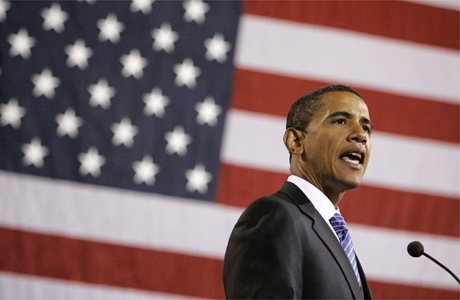 The Obama administration will differ from the Bush administration in a number of areas. National security policy is one area where there are likely to be significant difference. One important area for future relations with Russia, and therefore for the prospects for disarmament in Europe, is the US strategic missile defence system, and in particular the Obama administration’s policy on deployment at the European sites in Poland and the Czech Republic. This is a topic that has been extremely divisive in Europe amongst NATO allies, and one that has shown the Bush adnministration at its least sensitive to the Atlantic Alliance.
During the campaign, the President-Elect told ABC News that “I just want to make sure if you put up a missile defense system then it better defend against missiles. If it doesn't then that creates greater insecurity and instability not more.” This nuanced position is mirrored in his transition website’s policy statement on the issue:
National Missile Defense: An Obama-Biden administration will support missile defense, but ensure that it is developed in a way that is pragmatic and cost-effective; and, most importantly, does not divert resources from other national security priorities until we are positive the technology will protect the American public.
(http://www.change.gov/agenda/defense/)
Further, a statement in 2007 by then-candidate Obama adds to the doubts about ballistic missile defences (BMD) and notes that the Bush administration’s unilateral approach to deploying elements of strategic BMD in Europe has done much to divide NATO:
If we can responsibly deploy missile defenses that would protect us and our allies we should – but only when the system works. We need to make sure any missile defense system would be effective before deployment. The Bush Administration has in the past exaggerated missile defense capabilities and rushed deployments for political purposes. The Bush Administration has also done a poor job of consulting its NATO allies about the deployment of a missile defense system that has major implications for all of them. We must not allow this issue to divide “new Europe” and “old Europe,” as the Bush Administration tried to do over Iraq.
(http://obama.senate.gov/press/070716-obama_statement_73/)
This summer, following the 5-day war between Georgia and Russia, President-Elect Obama said that Congress should review the technological capabilities of the proposed European deployments, but divorced this from American mutual defence obligations in NATO, saying “..I have said that congress should review it [BMD]. But there is no doubt that after the Russian invasion of Georgia that NATO allies… like Poland need to know that they are going to be protected if there in encroachment on their territory.” Dividing these two issues is vital. The fears engendered in Eastern Europe by the Russian destruction of Georgia’s military led to Poland agreeing quickly to the Bush BMD deployment request after months of hesitation about its security benefits. Reassuring Poland and the Czech Republic about the solidity of NATO allows for a more rational discussion about missile defence.
Recent confusion on the part of Polish President Lech Kaczynski shows how sensitive this issue is. Kaczynski and Obama had a conversation on November 8, 2008, and Kaczynski later claimed that Obama had said the BMD deployment would go ahead without delay. The Obama transition team responded that his position had not changed, reiterating past statements.
Democrats have had to be extremely careful on missile defences this year, to avoid handing the Republicans an excuse to claim in the lection that Obama is ‘soft on defence’. They have crafted a position publicly supportive of missile defences, but which will prevent any deployments in the near future. The Obama campaign was consulted by Congressional leaders as this legislation was developed. The relevant legislation, the Defense Authorization Bill for Fiscal Year (FY) 2009, authorizes $465.8 million for the missile defense sites in Poland and the Czech Republic, a cut of $246.3 million from the administration request. It bans any use these funds for the procurement, site activation, construction, preparation of equipment for or deployment of a long-range missile defense system in Europe until the two countries have ratified the missile defense basing agreement and a status of forces agreement permitting the stationing of the missiles and the radar and associated personnel. This has not happened. The legislation also requires the Secretary of Defense to certify that the system “has demonstrated, through successful, operationally realistic flight testing, a high probability of working in an operationally effective manner and the ability to accomplish the mission.”
Most observers believe that, if the system can be proved at all, it will take years and hundreds of millions of dollars in expenditure to do the necessary tests. This at a time when the incoming administration is faced with a recession, the cost of funding two wars, and an economic bailout whose cost is rising towards $1.8 trillion. Missile defence programmes, especially unproven programmes like the European mid-course interceptors, are prime candidates for savings, and indeed on November 5 the Inside Defense newsletter reported a transition team position paper which listed missile defence programmes as ripe for cuts.
However, some of the potential candidates for Defense Secretary are supporters of the mid-course BMD system. It is possible that Defense Secretary Robert Gates, a strong missile defence proponent, may stay in post. It has also been reported that former Navy Secretary Richard Danzig, a key Obama aide, could be appointed as Deputy Secretary of Defense to Gates, or even as Defense Secretary in his own right. Danzig recently brushed aside Russian concerns about the missile defense programme saying “Serious conversation needs to be had with the Russians about what we’re trying to do, because it is not anti-Russian.” He is reported to believe that the European deployments should continue. (http://www.nti.org/d_newswire/issues/2008_10_2.html#4C6AA903).
President Obama’s inclination is likely to be to at least delay if not to cancel the European missile defence deployments. This will be a relief to most in NATO Europe, although the Czech government in particular may feel betrayed. The Czechs have bought into the Bush vision completely, seemingly without thinking of the consequences if Obama won.
Obama is aided in his retreat from the bush policy as the Congress has stymied President Bush’s plan to have the deployment well underway before the next President takes office, something which would have made cancelling the system much harder. His doubts about the technical capabilities are added to fiscal pressures to cut budgets. Moreover, Obama will be working with Democrats in Congress who oppose the deployment of mid-course missile defences in Europe.
On balance, it is likely that no action will be taken to deploy systems in the next year or two. Additional testing would take at least this long. This breathing space will allow time for negotiations with Russia on the future of strategic weapons systems in Europe. It will also see an engagement with Iran. If these negotiations are positive it is unlikely that the European BMD sites will go forward during the full term of an Obama Presidency.
Subscribe to:
Posts (Atom)